
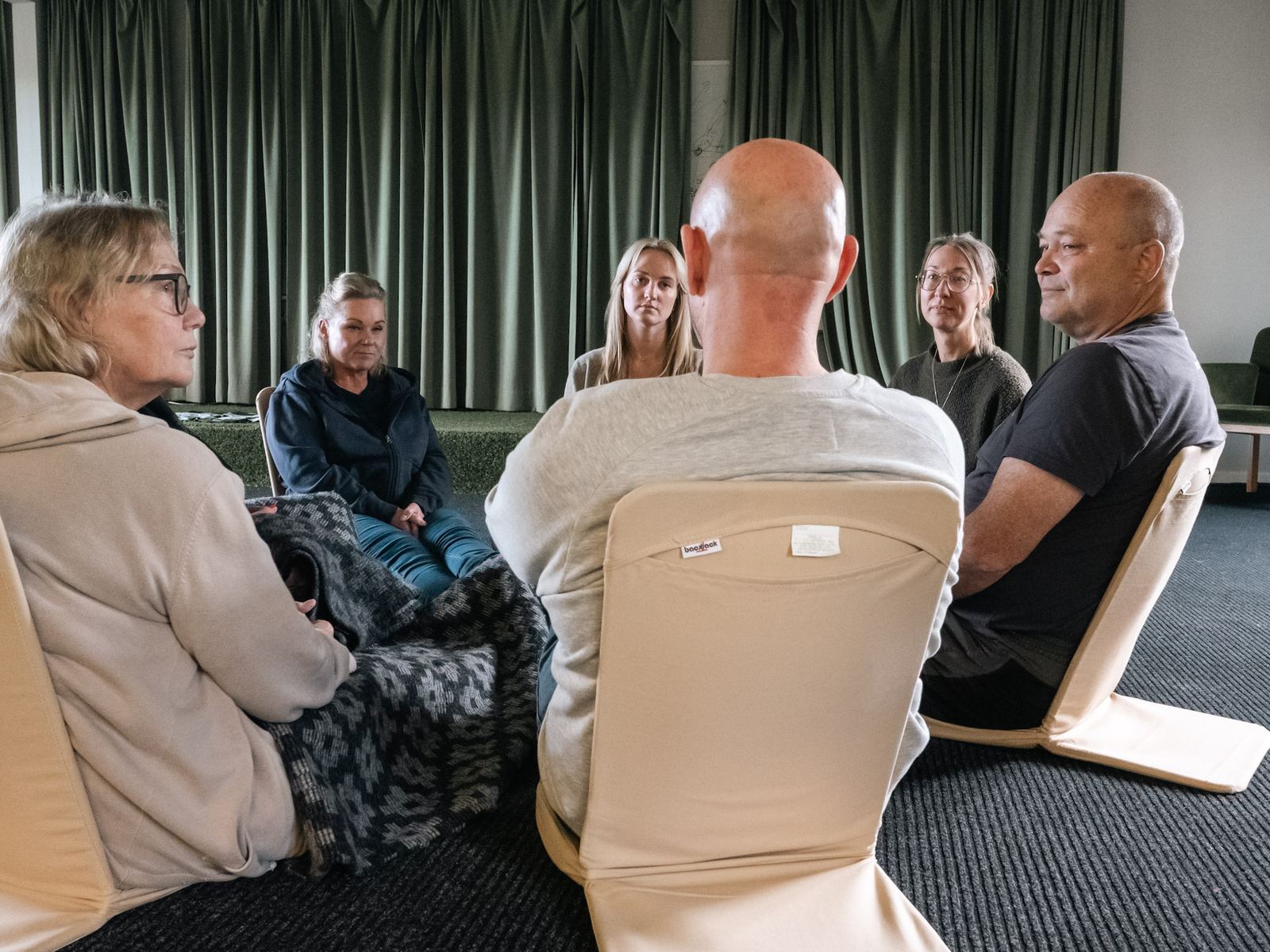
We work where the feelings sit
Most leadership programmes, UGL (the Swedish group and leader development course) included, operate at the intellectual level. Time to reflect, to know your own inner needs and to satisfy them in order to feel well has come second in the way we live now, and that is where this week does something else.
The inner control room
“At work we cannot take feelings into account.” Sound familiar? In that environment a person can manage for a while without contact with their feelings, and a while can mean a day, a week or thirty years. But sooner or later the bill arrives.
We think it is better to find your way to your inner control room and learn to read it than to pretend it is not there. The warning light blinks anyway, and it blinks to no purpose if nobody is there to see it.
What you get back
This is what we see in participants who come from working life. It is our experience and not a measurement, but we have seen it often enough to want to tell you about it.
And it is nothing new. Back at Mullingstorp, where the course has its roots, six in ten courses in 1999 were paid in full or in part by the employer, and managers were the largest group of participants.
The energy lasts longer. Someone who notices the early signs that it is becoming too much can do something about it while that is still easy, instead of pushing on until the body says stop.
Calmer decisions. Someone who knows themselves has less noise from prestige and short-term impulses to listen through. It shows in which way they go, and it shows in how they explain that to everyone else.
The conversation happens in time. We see people begin to recognise a tension earlier, both in themselves and between each other, and then a misunderstanding gets cleared up before it has grown into something bigger.
Things can be said as they are. When feedback can be given and taken straight, people dare to try things that might fail, ask for help and take the initiative, instead of spending their energy on protecting themselves.
The person selling does not need the customer’s yes. Not for their own sake, at any rate. Then it becomes possible to listen properly and hear what the customer actually needs, and the meeting becomes a conversation rather than a performance.
Setbacks do not hit as hard. Someone who can meet their own feelings is not as easily thrown off course by a setback, and a whole team feels it when one person can stay standing through a difficult stretch.
More people want to stay. When development is something you do with your people and not to them, it shows, and it means something to a person that someone thinks they are worth a week like this.
How does it differ from UGL?
UGL, the standard Swedish leadership programme developed by the Swedish Defence University, is good at what it does. It sharpens your sense of yourself as a person, and of how you act and how others read you. But you reflect through logical reasoning, and you practise acting from the head rather than the body.
Here you step down out of the analysis instead. Feelings cannot be rationalised, and if you keep at it long enough you end up having thought your own feelings away, no longer knowing what you want or need.
The most effective managers are realistic about their own capability and about the effect they have on others. They recognise where their emotional reactions come from, and understand how those reactions steer decisions, behaviour and relationships.
Effective leadership begins in the recognition that you do not always have the answer, but want to learn and to take responsibility for your mistakes. That steadiness spreads through an organisation.
Is it a quick fix?
No. Working on self-knowledge is an investment and not an intervention, and what comes back is a steadier and more self-directed colleague. It takes the time it takes.
Certificate and invoice
The participant receives a certificate of completion. The fee can be invoiced to the employer, and a gross salary deduction is also possible. More about payment is under price and payment. If you are wondering about anything practical, do get in touch, it is easier to talk through than to read up on.
Read also
Next course dates
The week starts on Wednesday evening and ends on Thursday, seven days and eight nights. The dates below include both the arrival day and the departure day.
4.99 out of 5 on Google and Facebook, calculated on all reviews.
We get back to you and answer your questions. Registering your interest commits you to nothing, and you decide only after your conversation with us.